
From buying distressed properties to rethinking commercial spaces, real estate leaders shared how they built their businesses, recognized opportunities and adapted to changing markets at FIU Business's REact 2026 conference.
Held November 3, the conference brought together more than 350 executives, investors, developers, lenders and students under the theme “Real Estate at an Inflection Point.”
A slow market, with room for optimism
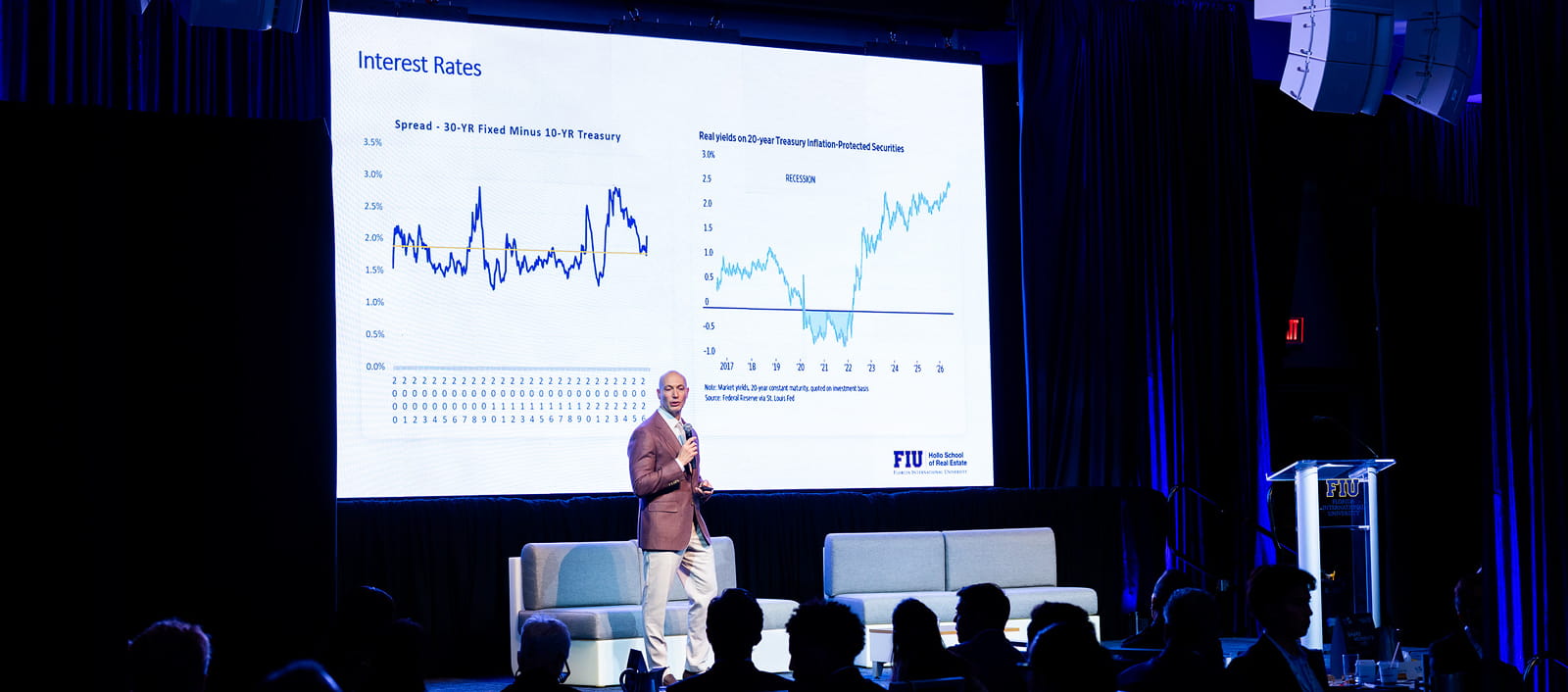
Eli Beracha, director of FIU's Hollo School of Real Estate, pointed to economic uncertainty, changing capital markets and shifting industry conditions as challenges facing real estate professionals, but also as potential opportunities for investors and developers.
In his market outlook, Beracha noted that residential activity remains slow, with more sellers than buyers, while commercial real estate has held steady since 2025.
Among survey participants, 83% said it was a bad time to buy a home. Beracha recalled similarly negative sentiment before inflation and interest rates declined, creating favorable buying conditions.
“It’s prime for good times ahead,” he said, adding that interest rates “are where we should be” and “the market is priced fairly.”
From distressed retail to hospitality-driven offices
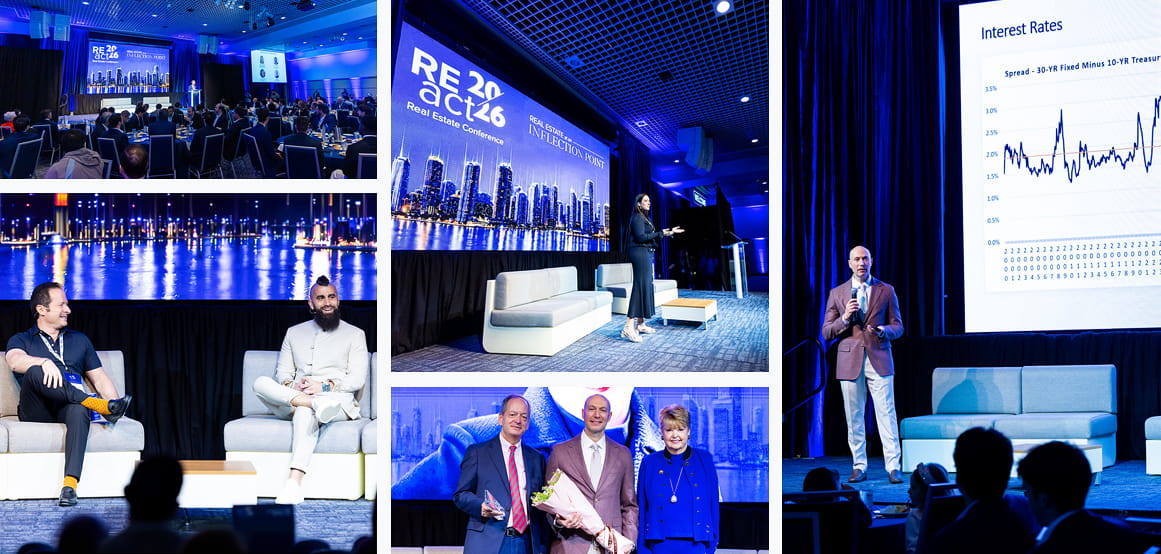
Miami developer Robert Rivani never graduated from middle school or earned a high school diploma. He sold his shoe business at 16 for $250,000 and went on to complete more than $1 billion in real estate acquisitions and dispositions without outside investors or partners.
“My first aha moment was when I made seven figures on my first deal,” Rivani told Adam J. Tiktin, CEO of United Capital, during their fireside chat.
One of his early investments was a bank-owned shopping center in Atlanta that he purchased for $600,000. Rivani approached tenants to find out what they were paying in rent and learned the average was $30 to $35 per square foot. “I said I can save you money.”
After renovating the center, Rivani sold it for $2.2 million. The deal introduced him to 1031 exchanges, which became part of his investment strategy.
By the COVID-19 pandemic, he owned 10 shopping centers. But as consumers increasingly turned to delivery services such as Instacart, Rivani began looking beyond retail.
“I decided to deviate from my plan and began investing in hospitality,” he said.
Now based in Miami, Rivani is developing Class X, a workplace concept that brings hospitality and wellness into office properties. He plans to raise capital in 2027 to expand the brand.
Selling the experience at Aventura Mall
Jackie Soffer, CEO of Turnberry, recalled Aventura's early days, when her father helped transform largely undeveloped land into a community centered around golf, waterfront living and shopping.
Speaking with Clay Dickinson, assistant teaching professor at the Hollo School, Soffer discussed how the pandemic reinforced Miami's appeal and why the experience matters as much as the stores themselves.
The pandemic reinforced Miami's appeal, she said, while changing how people use retail spaces.
“It's all about the experience,” Soffer said, describing Aventura Mall's approach to attracting visitors. Rather than focusing solely on which tenants pay the highest rent, the mall has added attractions such as a weekend farmers market.
Turnberry is also expanding its retail offerings through the former Sears property at Aventura Mall. Beyond retail, the company is developing the 800-room Grand Hyatt Miami Beach, connected to the Miami Beach Convention Center and scheduled to open in late 2027.
Finding opportunity in the ‘non-sexy suburbs’
Brothers Gabriel and Marcel Navarro, managing partners of MMG Equity Partners, got their start in real estate through the family pharmacy business.
The managing partners of MMG Equity Partners explained how buying and holding properties helped finance the expansion of Navarro Discount Pharmacy. When CVS acquired the chain in 2014, Gabriel said, the real estate was worth as much as the operating business.
“This is a people business and networking is so important,” Marcel said. “It takes time.”
Asked about markets they wished they had entered earlier, Gabriel pointed to Wynwood and Midtown Miami.
“We didn’t see the Wynwoods, Midtowns and didn’t get in early,” he said. “We’ll stick to the non-sexy suburbs.”
The brothers have since expanded their investments beyond South Florida, including Tamarack Resort, a 3,600-acre ski, golf and lake destination in Idaho. They're also moving into multifamily development on properties they already own.
“We’re buying obsolete at the price of obsolete,” Gabriel said. “We tear the center down and multi-family is going up.”
From beach motels to luxury development
In 1986, Ramola Motwani and her husband, immigrants from India, began buying motels along Fort Lauderdale Beach, where Spring Break crowds had driven down property values. Their first purchase was the Merrimac motel.
“We lived on the property; our living room was connected to the front desk. We were determined to succeed,” Ramola recalled. “I went to 25 banks and the 26th gave me a loan and refinanced.”
Speaking with her son Dev Motwani, managing partner of Merrimac Ventures, Ramola described how the family continued acquiring properties, including the Tropicaire in 1994. Sites once occupied by their motels are now home to luxury developments, including the Four Seasons, Conrad, Gale and Paramount Fort Lauderdale.
“The most valuable thing has been the relationships cultivated over time,” she said.
Merrimac Ventures has since expanded into projects including Miami Worldcenter. Dev said the company has $3 billion in development underway across South Florida, Ocala and Telluride, Colorado.
AI adoption and the value of relationships
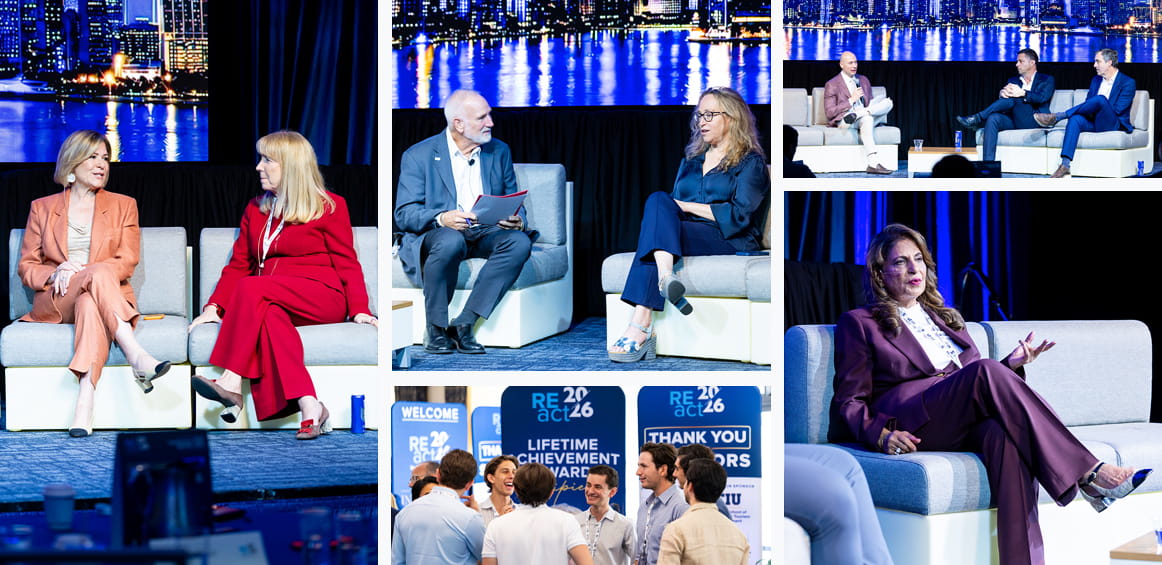
“The Women Defining Real Estate’s Next Cycle,” panel featured Beth Azor, owner of Azor Academy; Tere Blanca, CEO of Blanca Commercial Real Estate; Traci Miller, senior vice president at Miller Construction Company; and Christina Pappas, president of The Keyes Company and Illustrated Properties.
Artificial intelligence drew particular attention. Panelists discussed its growing role in business while cautioning that it cannot replace critical thinking, sound judgment or personal relationships.
“A lot of things are changing. If you don’t have an AI agent you’re going to get left behind,” Pappas said. “You have to streamline a piece of your business and embrace it because it’s hot.”
The conversation also turned to career development, mentorship and making connections. Speaking directly to students in the audience, Miller offered some practical advice.
“You have to be your own best advocate; be visible, be vocal,” she said.
Celebrating momentum and lifetime achievements
FIU Business Dean William Hardin also reflected on how much the region has changed and the role the university's graduates play in its growth.
“When I came here, the skyline was ‘de minimis,’ it didn’t exist like it does today,” Hardin said. “We have some of the most important world-class buildings in the world. We have talent that comes here because we have the real estate community.”
Hardin highlighted FIU's No. 1 global ranking for real estate research and its annual graduation of more than 120 master's students in the field, more than any U.S. university.
Teresa King Kinney, CEO of the MIAMI Association of Realtors, received the conference's Lifetime Achievement Award for her leadership and contributions to South Florida real estate.
Members of FIU's Real Estate Student Association thanked speakers for their advice and the opportunity to connect with industry professionals, describing the experience as empowering.
To view the event image gallery, visit our Flickr page: