
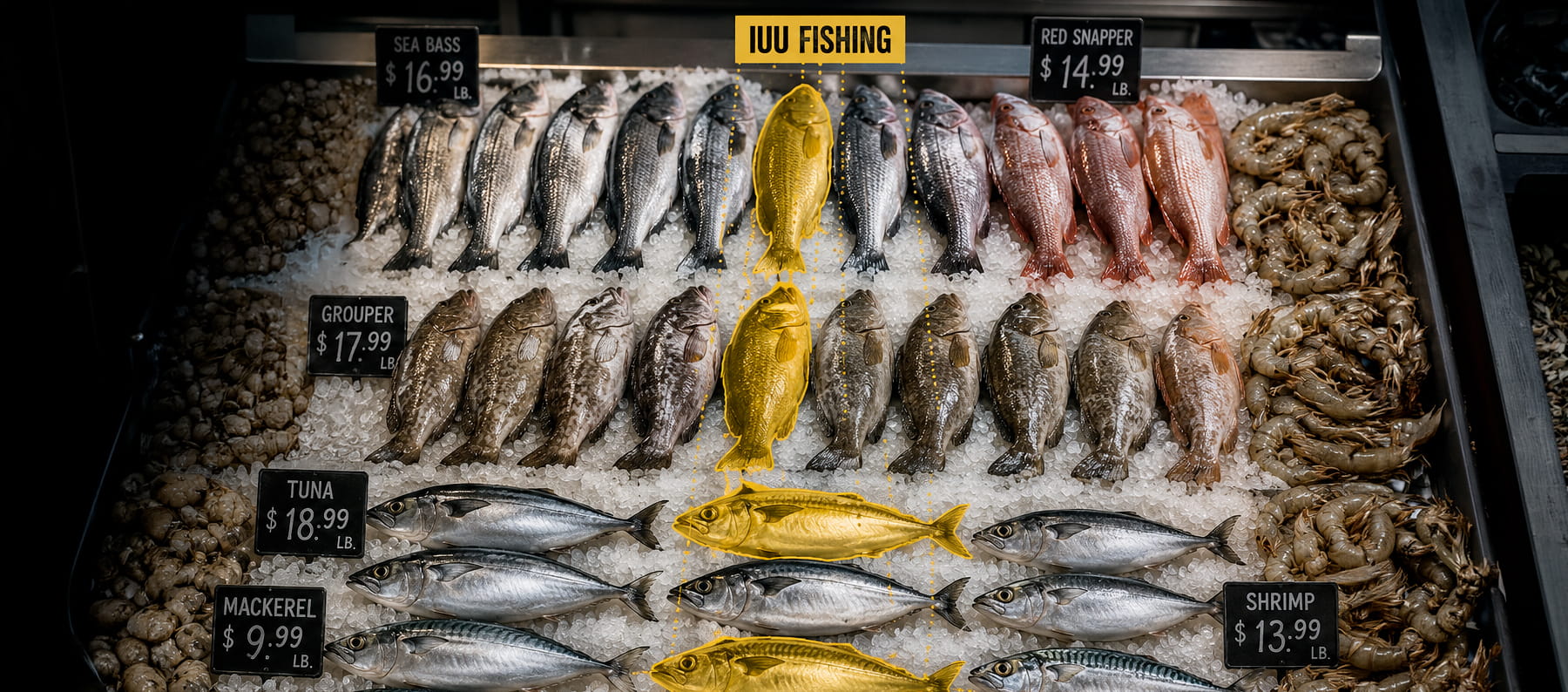
Illegal, unreported and unregulated (IUU) fishing is not just an environmental problem. It is a global business, trade, food-security and human rights issue that costs the world economy billions of dollars each year, weakens legal fisheries and threatens communities that depend on seafood.
According to U.S. Customs and Border Protection, IUU fishing accounts for approximately one in five fish caught worldwide and between $23.5 billion and $36.4 billion in estimated global losses annually. The practice can range from small-scale misreporting of a catch to coordinated activity by criminal networks or vessels operating across borders.
Illegal fishing can include operating without a license, exceeding catch quotas, using banned gear, fishing in protected areas or closed seasons, targeting endangered or undersized species, and transferring catches between vessels at sea to hide their origin. These activities deplete fish stocks, damage marine habitats and create unfair competition for law-abiding fishers.
The issue has local relevance in Florida as well, where recreational fishing violations can begin with fines of $50 plus the cost of a license, and commercial vessels may face penalties ranging from $5,750 to $22,000 per violation. While those penalties address violations within state enforcement systems, they point to a broader reality: illegal fishing is not only a global problem, but one with direct implications for coastal economies such a Florida.
IUU fishing also has significant implications for worldwide trade. Because seafood supply chains often cross multiple jurisdictions, illegally caught fish can enter legitimate markets and become difficult to trace. That creates risk for businesses, consumers and regulators, particularly in countries such as the United States that import a large share of their seafood.
A nation’s exclusive economic zone generally extends up to 200 nautical miles from its coastline, giving it rights over fisheries, oil and gas exploration, and other marine resources. Disputes involving foreign fishing vessels underscore how closely fisheries are tied to national security, export income and maritime sovereignty. Recently, a Japanese Coast Guard cutter detained a Chinese fishing vessel in its waters and arrested the skipper. Such instances illustrate how dependent and motivated nations are on their own fisheries for both food security and export income that are most threatened by IUU fishing.
International organizations, including the Food and Agriculture Organization of the United Nations, have worked to address the issue through agreements such as the Port State Measures Agreement, which restricts port access for vessels suspected of illegal activity. In the United States, NOAA Fisheries, the U.S. Coast Guard and other agencies monitor waters, enforce regulations and support seafood traceability efforts designed to keep illegal products out of the market.
The full economic impact of IUU fishing is difficult to measure because much of the activity is hidden by nature. But its consequences are clear. Illegal fishing undermines sustainable fisheries, weakens legitimate businesses, damages ocean ecosystems and is often linked to forced labor, unsafe working conditions and human trafficking.
Reducing IUU fishing will require stronger enforcement, better traceability and great cooperation among governments, businesses and consumers. Without those safeguards, illegal fishing will continue to threaten marine resources, lawful commerce and the food security of people around the world.