
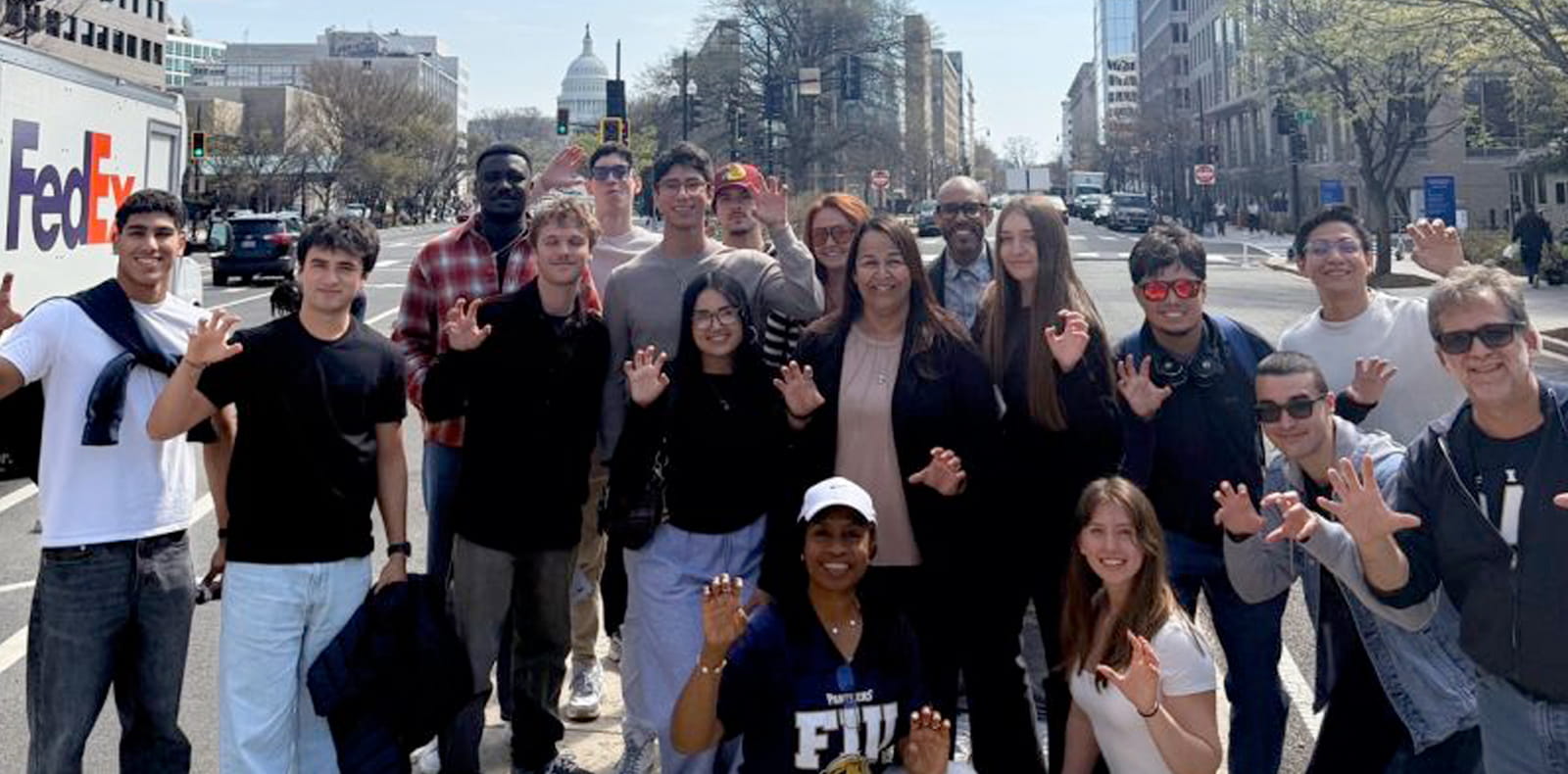
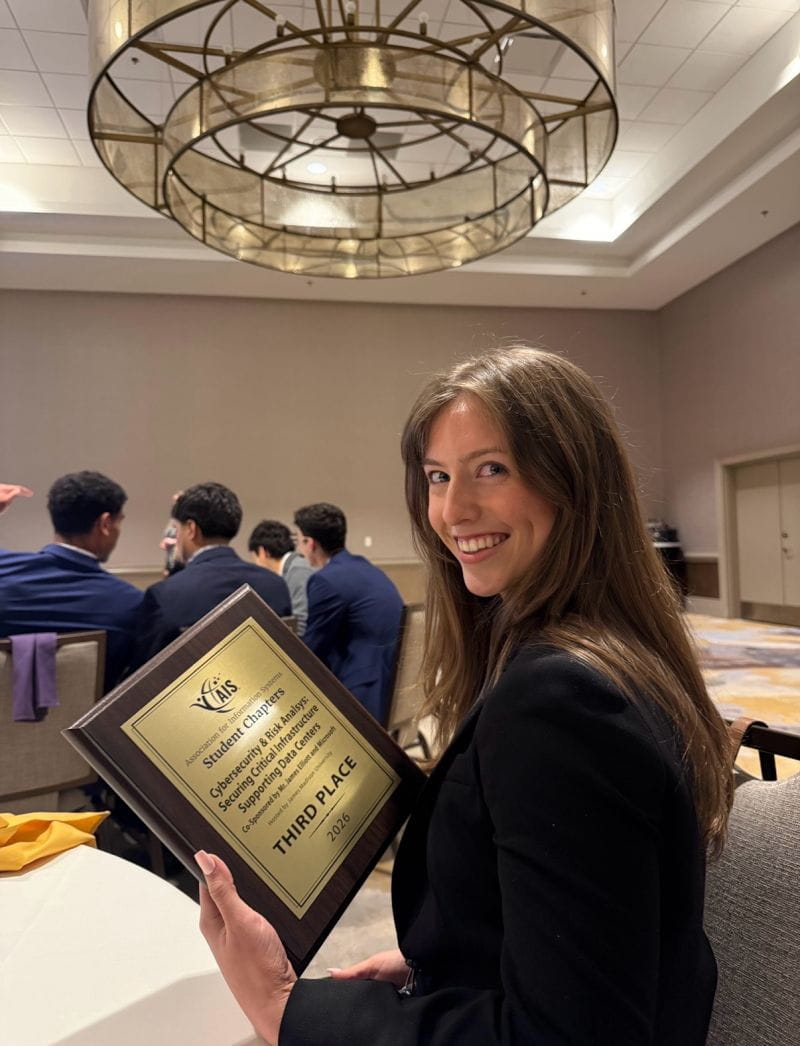
A team of FIU Business students squared up against national competitors and walked away in third place at a national cybersecurity competition hosted by the Association for Information Systems, building on a project first developed through the ATOM x AIS Technology Innovation Challenge.
The team, Angelica Bravo, Gael Joel Nguestsa Litumbe, Zeyad Abdalaziz Zahran, and Fabio Dominguez, competed in the Microsoft & James Elliott Cybersecurity and Risk Analysis Challenge, part of the AIS Student Chapter Leadership Conference 2026. The competition asked teams to develop a cyber risk assessment and mitigation plan for a fictional infrastructure company supporting data centers in Northern Virginia, with a focus on securing operational technology systems and proposing practical, business-minded safeguards.
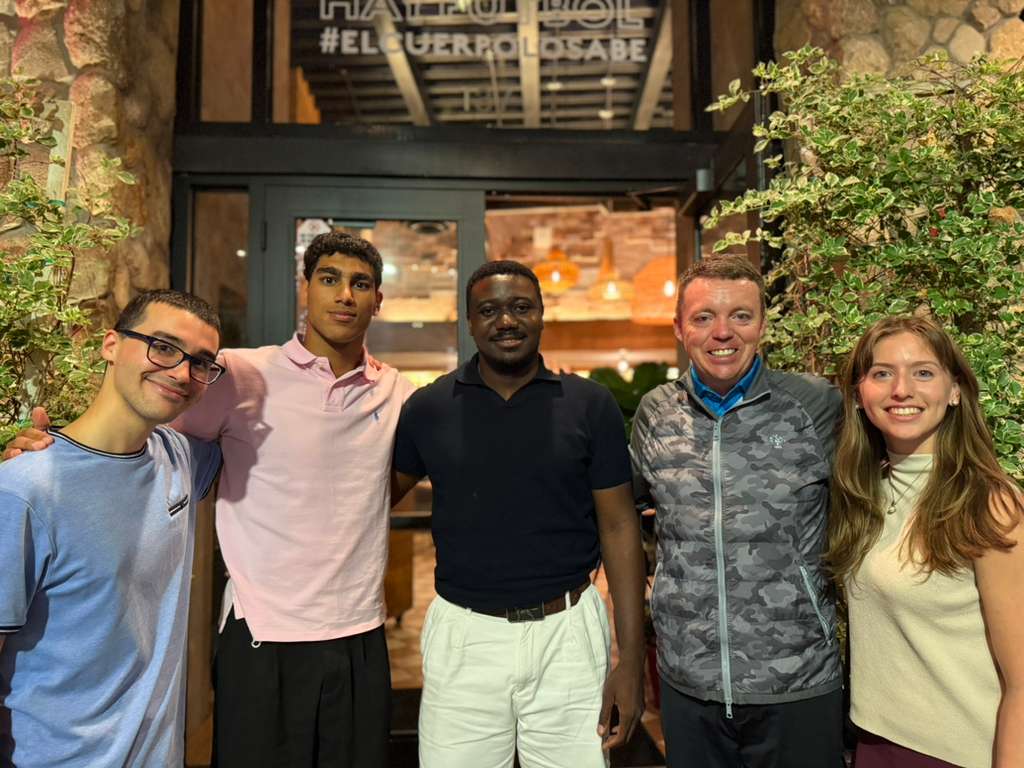
The team received a $500 prize, but for the students, the experience delivered far more than a cash award.
"The prize itself was the experience we gained out of it, and really the lessons that we've learned through it," said Zahran, who is pursuing a double major in information systems and business analytics. "Seeing them really look at our project and reflect on it, and want to reward us for that was really a good feeling."
The students first advanced through an internal competition process that included a video submission before presenting at FIU Business last February 2026. From there, they strengthened their work using feedback from judges, professors and mentors before taking the project to nationals at James Madison University, where final presentations were held March 27.
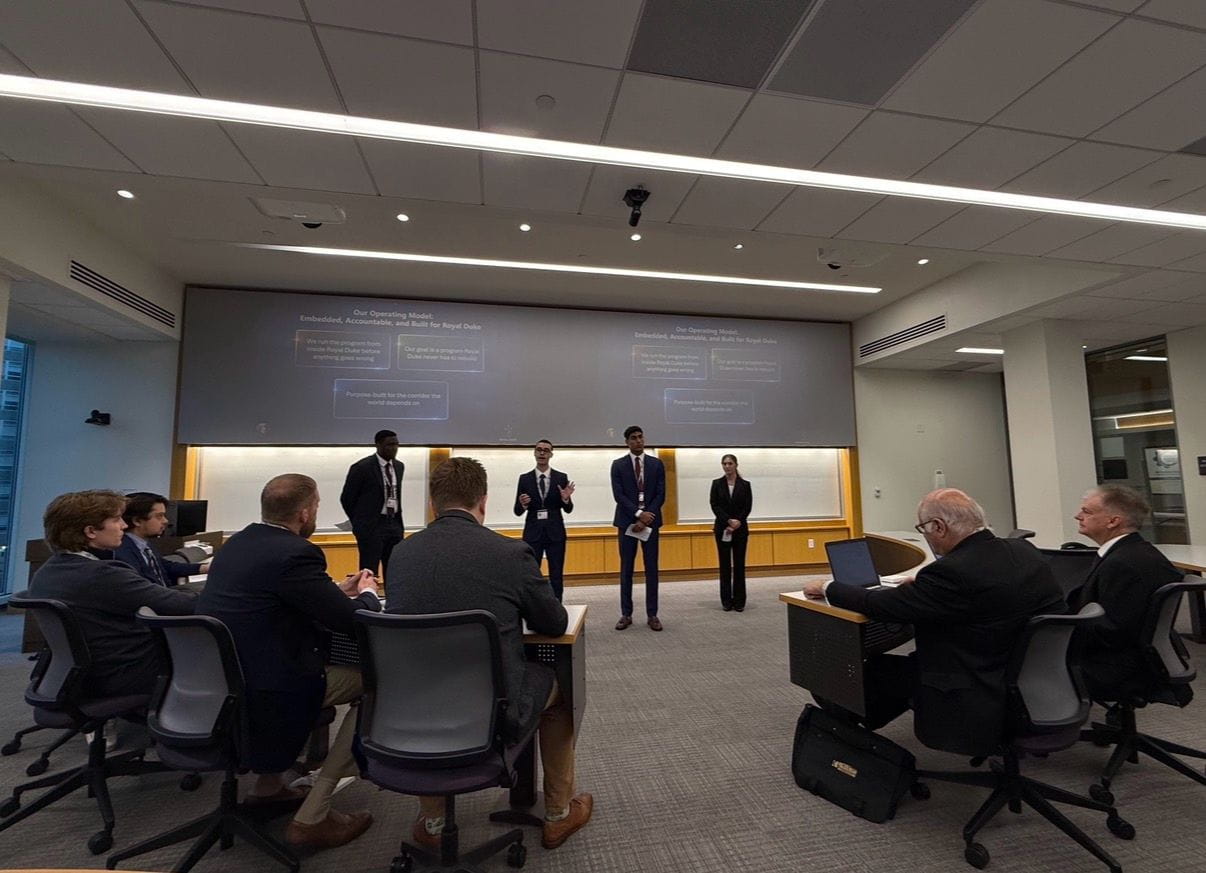
Their presentation centered on Royal Duke Infrastructure Group, a fictional utility provider serving data centers in Loudoun, Prince William and Fairfax counties. Teams were asked to identify vulnerabilities, assess cyber risks and recommend a cost-effective mitigation strategy. FIU’s team proposed a roadmap to better secure the company’s critical infrastructure while balancing resilience, operations and investment.
Nguestsa Litumbe said one of the team’s biggest challenges was translating technical concepts across different academic backgrounds.
“Not everyone here has a strong technical background,” he said. “One of the most difficult parts was to make the idea of the prompt a common language for everyone, so we could understand what we had to deliver and how we had to deliver it.”
That teamwork became one of the group’s greatest strengths.
“I got a lot of value out of this experience,” Zahran said, “including being able to learn how to work as a team, and how to connect with each other, given our different backgrounds, assign each other roles that we knew we’d be able to do.”
For Dominguez, the competition also became a personal milestone.
“Since enrolling at FIU, I was never really under the impression that I was going to participate in competitions,” he said. “I was so proud of my performance, and the fact that I was able to really represent FIU in a way that people could be proud of as well.”
The experience extended beyond the competition itself. After the team returned, the students were taken to a celebration dinner by Cliff Payne, vice president of engineering at TESYS Networks and a member of the ATOM Think Tank advisory board, offering another reminder of the mentorship and industry support surrounding their FIU experience.
Bravo said that kind of encouragement left a lasting impression.
“For somebody in the industry at the level that you’re at, you still make the time to want to teach and mentor FIU students,” she said. “That speaks volumes.”
The team encouraged future competitors to prioritize understanding the “why” behind their project rather than trying to memorize scripts or presentations, and to embrace collaboration across different academic disciplines.