
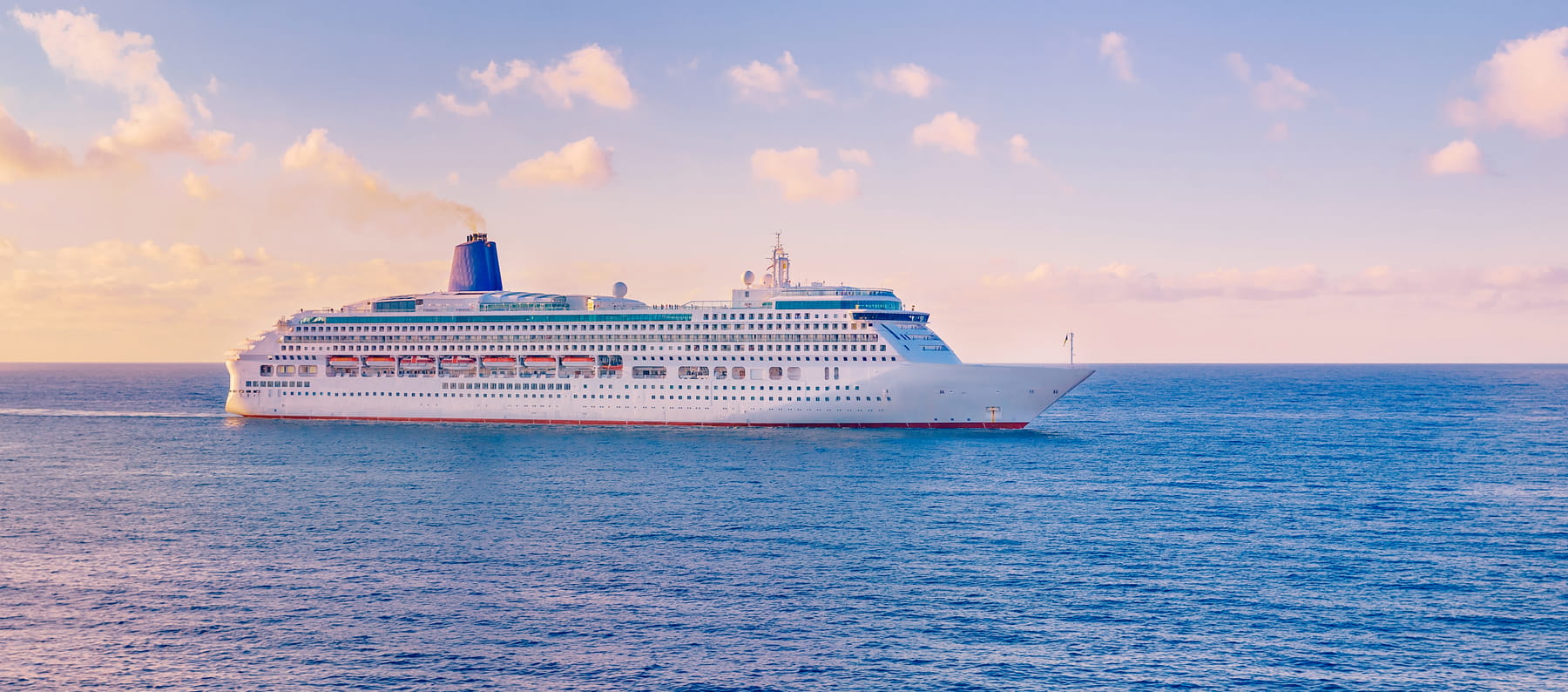
A recent hantavirus outbreak aboard an expedition cruise ship is unlikely to become a pandemic. But for FIU Business professor Attila J. Hertelendy, that is exactly why it matters.
The outbreak aboard the Dutch-flagged MV Hondius exposed a familiar weakness in global health preparedness: the world has advanced scientific tools to identify emerging pathogens, but still struggles to coordinate response across borders, agencies and jurisdictions when an outbreak is unfolding in real time.
That coordination gap is central to Hertelendy’s work. In addition to studying health security, crisis management and emergency preparedness, he is working with FIU Business researchers and other scientists to explore how artificial intelligence can strengthen early warning systems and help identify infectious disease threats before they escalate.
“This is a really big issue,” said Hertelendy. “That is why we are working with a team of FIU researchers and other scientists to develop AI solutions that can help predict these outbreaks before they happen.”
Hertelendy, an assistant professor in FIU Business’ Department of Information Systems and Business Analytics and a health security expert, examined the case in a new JAMA perspective co-authored with Lawrence O. Gostin of Georgetown University Law Center and Gregory R. Ciottone of Harvard Medical School.
The outbreak began after the vessel departed Ushuaia, Argentina, on April 1. According to the authors, the first fatality occurred April 11, but formal notification to the World Health Organization did not occur until May 2, after dozens of passengers and crew had already dispersed internationally. As of May 20, European health officials reported 10 cases, including eight laboratory-confirmed cases, and three deaths linked to the voyage.
Hertelendy writes the central issue is not whether this outbreak will spread widely. It likely will not. The larger concern is that the response revealed delays in detection, unclear lines of authority and uneven public health implementation among vessel operators, port states, passengers’ home countries and international health agencies.
Cruise ships, he noted, create a particularly complex outbreak environment. They bring together multinational passengers and crew, close-contact living conditions, multiple ports of call and extensive onward travel. Once an illness emerges at sea, responsibility can quickly become diffuse and politically complicated.
Hertelendy and his co-authors argue that cruise ships should be treated not simply as floating hotels, but as “mobile outbreak platforms” that require stronger baseline public health and medical capabilities. Those include onboard isolation capacity, syndromic surveillance, rapid specimen collection, clear medical evacuation protocols, updated passenger tracing systems and faster notification procedures when unusual illness clusters or unexplained deaths occur.
The lesson, Hertelendy said, extends beyond one ship or one virus. Smaller outbreaks can serve as stress tests for the systems that would be needed in a larger public health emergency. AI may help detect risks earlier, but technology alone is not enough without clear protocols, rapid information sharing and coordinated decision-making.