
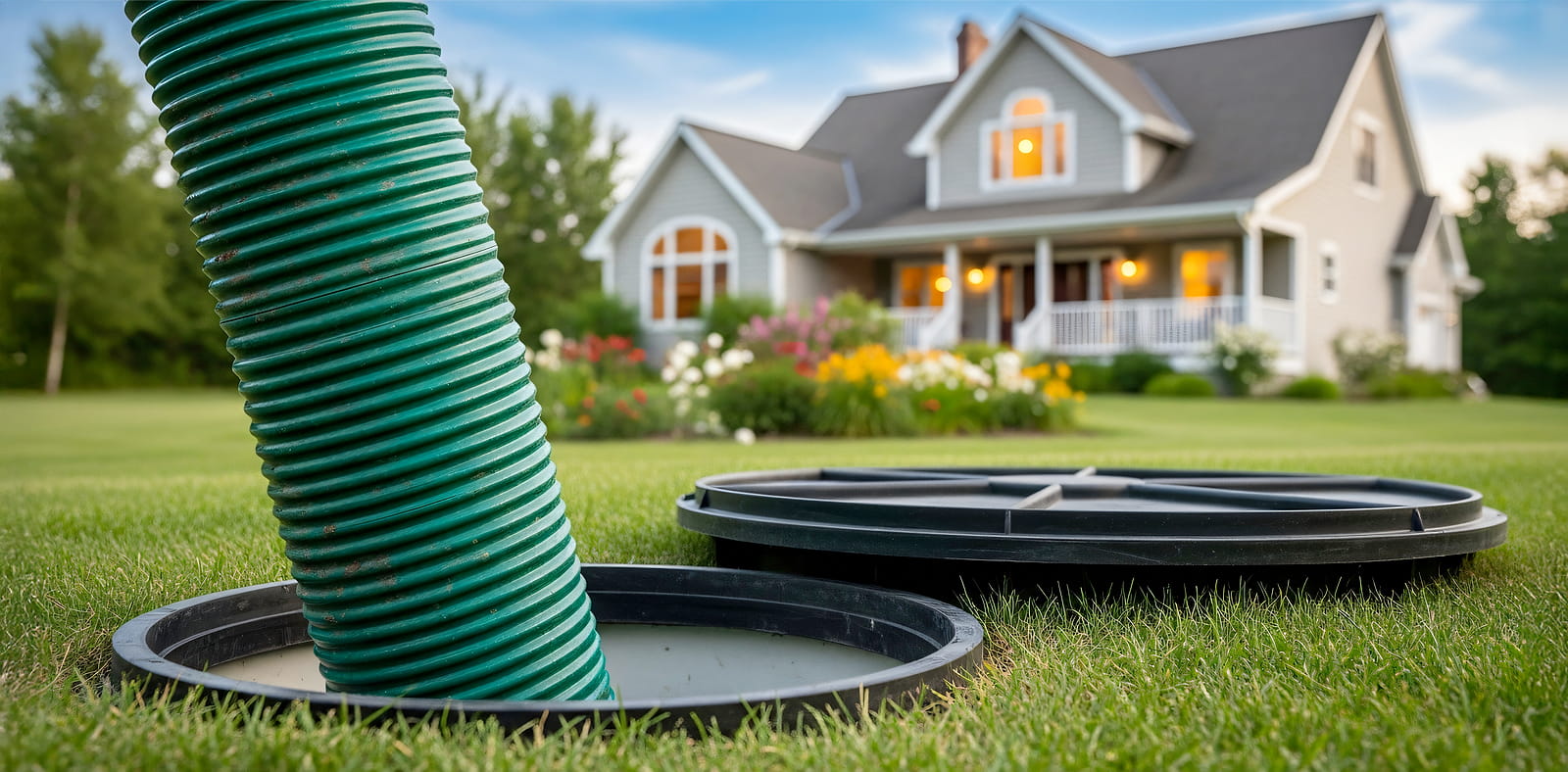
As climate change intensifies flooding risks across South Florida, a recent study suggests that one of the region’s most widespread infrastructure challenges, aging septic tank systems, is not being priced into the housing market the way policymakers might expect.
Research by Florida International University’s College of Business (FIU Business) finds that single-family homes in Miami-Dade County that rely on septic tanks often sell at a price premium, despite growing evidence that those systems pose environmental and public health risks in low-lying, flood-prone areas.
“There are more than 100,000 septic tanks in Miami-Dade County alone,” said Mark Thibodeau, an assistant professor of real estate at FIU Business and one of the researchers. “Many of them are located in areas that are increasingly vulnerable to sea-level rise and prolonged periods of heavy rain.”
Septic tanks require several feet of dry soil to function properly. As groundwater levels rise, even without a named storm, those systems can fail, allowing untreated waste to seep into nearby waterways and, in some cases, contaminate drinking water supplies.
Yet the study, published in the Real Estate Economics, finds that buyers continue to value homes with septic systems, largely because of their lower operating costs. Maintaining a working septic tank can cost a few hundred dollars every several years, compared with steadily rising sewer and water fees.
“That private financial benefit gets capitalized into home prices,” Thibodeau said. “But the environmental and public health risks are shared by everyone.”
Using nearly two decades of home sales data, the researchers found that buyers generally do not discount septic-served homes — even after Miami-Dade County began requiring sellers to disclose the presence of septic systems. Awareness alone, the study suggests, does not change buyer behavior.
“What really changes prices is when the risk becomes unavoidable,” said Zhenguo Lin, a professor of real estate at FIU Business who conducted the study with Thibodeau. Lin described the region’s reliance on septic systems as a “ticking time bomb,” one that remains largely invisible to buyers until failure becomes unavoidable and costly.
The research finds that properties receiving a Notice of Required Connection, a county mandate forcing homeowners to convert from septic to sewer, experience price declines of nearly 10%. The reason is straightforward: converting a home can cost $30,000 to $40,000, an expense borne almost entirely by the homeowner.
“That’s when the risk becomes very real,” Lin said. “It’s no longer theoretical or environmental, it’s financial.”
The findings highlight a growing tension between private incentives and public policy goals. Local governments want to reduce pollution and protect ecosystems such as Biscayne Bay, but homeowners often resist costly conversions when their systems appear to be working.
“If policymakers assume homeowners will voluntarily connect to sewer once the infrastructure is available, that assumption is wrong,” Thibodeau said. “The incentives are misaligned.”
The study also underscores why South Florida is uniquely exposed. Much of Miami-Dade is low-lying, and septic systems can fail during extended wet periods, not just during a hurricane. Researchers estimate that within the next decade, as many as half of existing septic systems could be routinely compromised by groundwater conditions.
For policymakers, the researchers say the takeaway is clear: expanding sewer networks alone will not solve the problem.
“If there’s a public interest in reducing septic-related risks,” Thibodeau said, “then there also needs to be a serious conversation about who pays and how to make that transition affordable.”
William Hardin, dean of FIU Business, was also on the research team.