
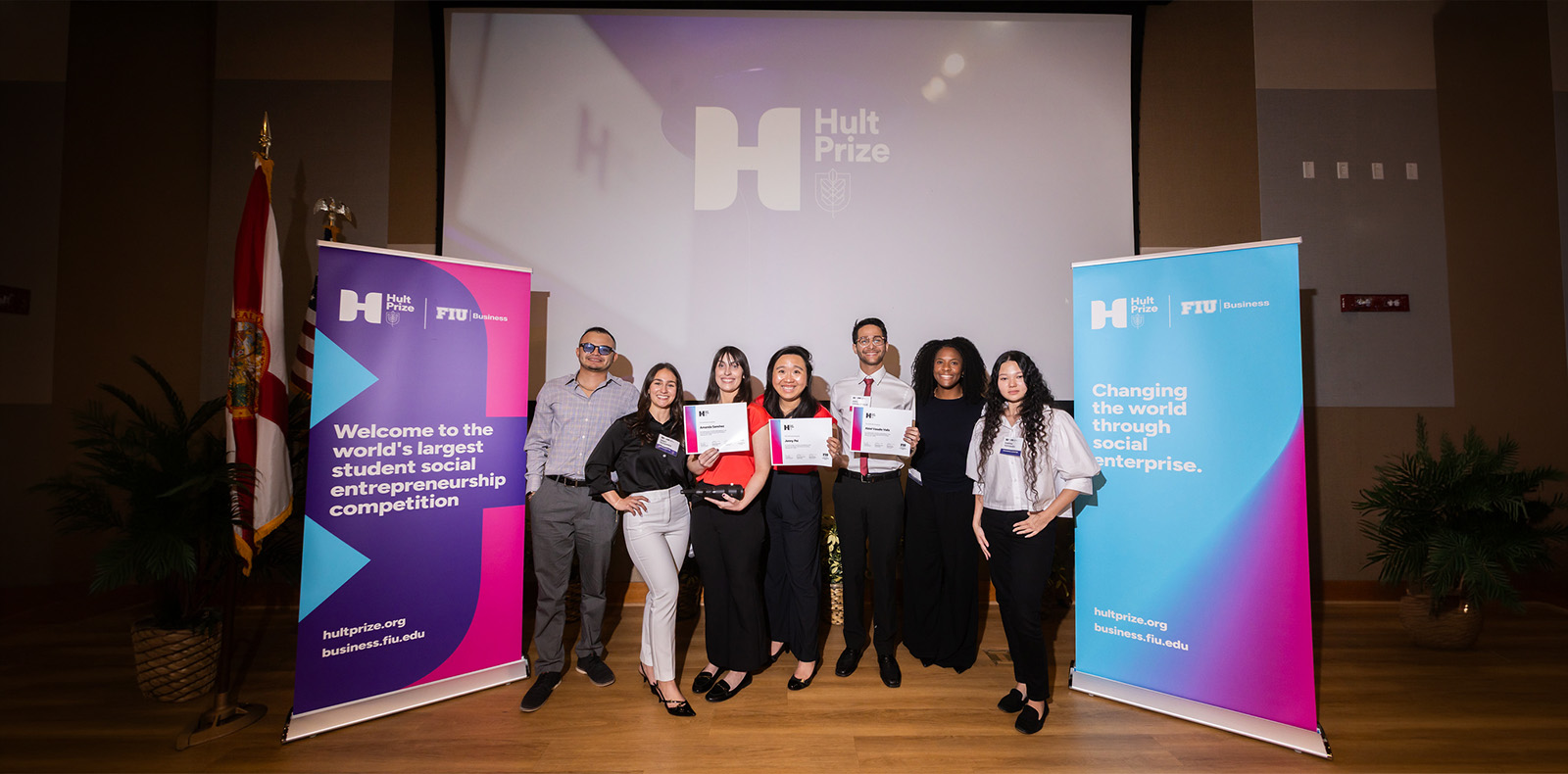
A handheld medical device designed to reduce preterm infant deaths earned top honors at the Hult Prize Foundation pitch competition, advancing a team of engineering students to the next stage of the world’s largest student entrepreneurship competition.
Hosted by the Eugenio Pino and Family Global Entrepreneurship Center, the annual competition challenges students to develop ventures aligned with the United Nations Sustainable Development Goals. Campus winners move on to national summits, where they compete for a place in global accelerators and, ultimately, a $1 million seed investment.
This year’s first-place team, Polar Dock, is led by biomedical and mechanical engineering students Jenny Pei, Amanda Sanchez and Abiel Vasallo Veliz. Their startup addresses spontaneous preterm birth, the leading cause of infant death worldwide.
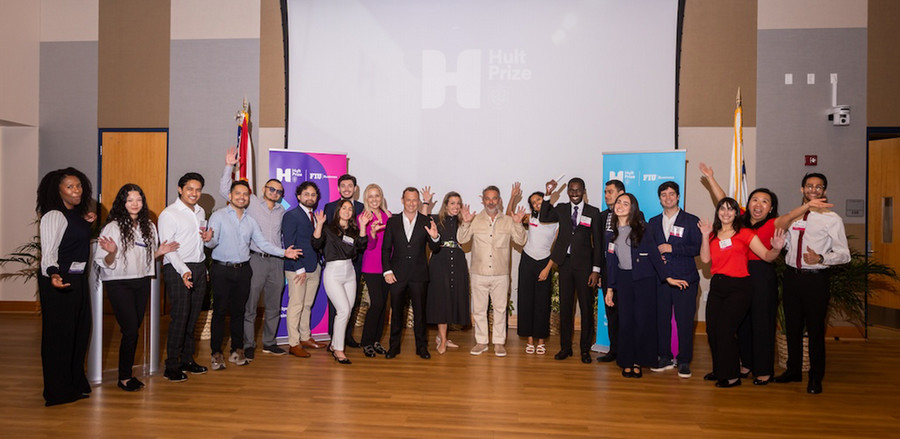 Full group shot Hult Prize
During their four-minute pitch, the team introduced PRIM — Portable Preterm Imaging — a speculum-free, handheld imaging system that assesses cervical stability throughout pregnancy. Using polarization optics to analyze collagen alignment in cervical tissue, the device produces an objective risk score designed to help physicians intervene earlier.
“Preterm birth is the number one cause of infant death worldwide, and a silent risk that can affect any potential parent,” Pei said during the presentation. She noted that globally, a baby is affected by preterm birth every 40 seconds.
Polar Dock’s business model is structured in phases: first through direct hospital sales, then through telehealth kits for at-home monitoring and, eventually, expansion into rural and underserved clinics. The team aligned its venture with U.N. goals focused on improving reproductive health care access and reducing neonatal mortality.
The competition featured a distinguished panel of judges, including David Gitman, CEO of Monarch Air; Eric Malka, co-founder of The Art of Shaving; and Tatiana Ferreira, CEO and founder of HarmonIQ — entrepreneurs whose experience spans aviation, consumer brands and health innovation.
The startup has already received backing from the National Science Foundation, is conducting clinical trials with Baptist Health and has patents pending on both its methodology and device.
“The talent and the entrepreneurship and the ideas that people had — there’s going to be a lot of viable businesses coming out from these ideas,” said Gitman, who also served as a mentor to the teams.
As a judge, he said he evaluated teams based on the competition’s strict criteria while also focusing on the strength of each founding team.
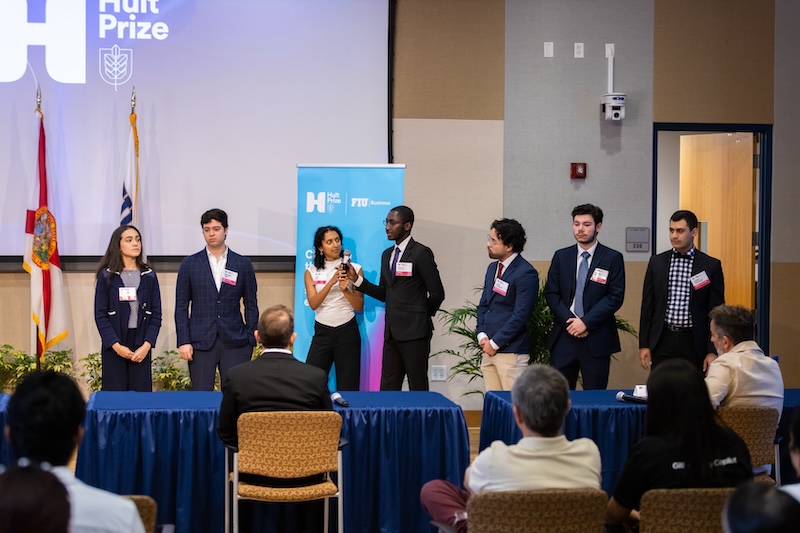 Participants during a second round of questions from the panel
“The most important thing in every business venture is a team,” Gitman said.
He added that entrepreneurship plays a critical role in solving global challenges, often in collaboration with academia and government. Even when ventures fail, he said, they generate economic activity and inspire future innovation.
Polar Dock members credited Gitman’s mentorship with sharpening their investor messaging and refining their scalability strategy.
“It was invaluable,” said Sanchez, explaining that the guidance helped them better articulate their patent protection and business model.
With the campus victory secured, Polar Dock will now represent FIU at the national level — bringing its technology one step closer to clinical implementation and, potentially, global impact.