
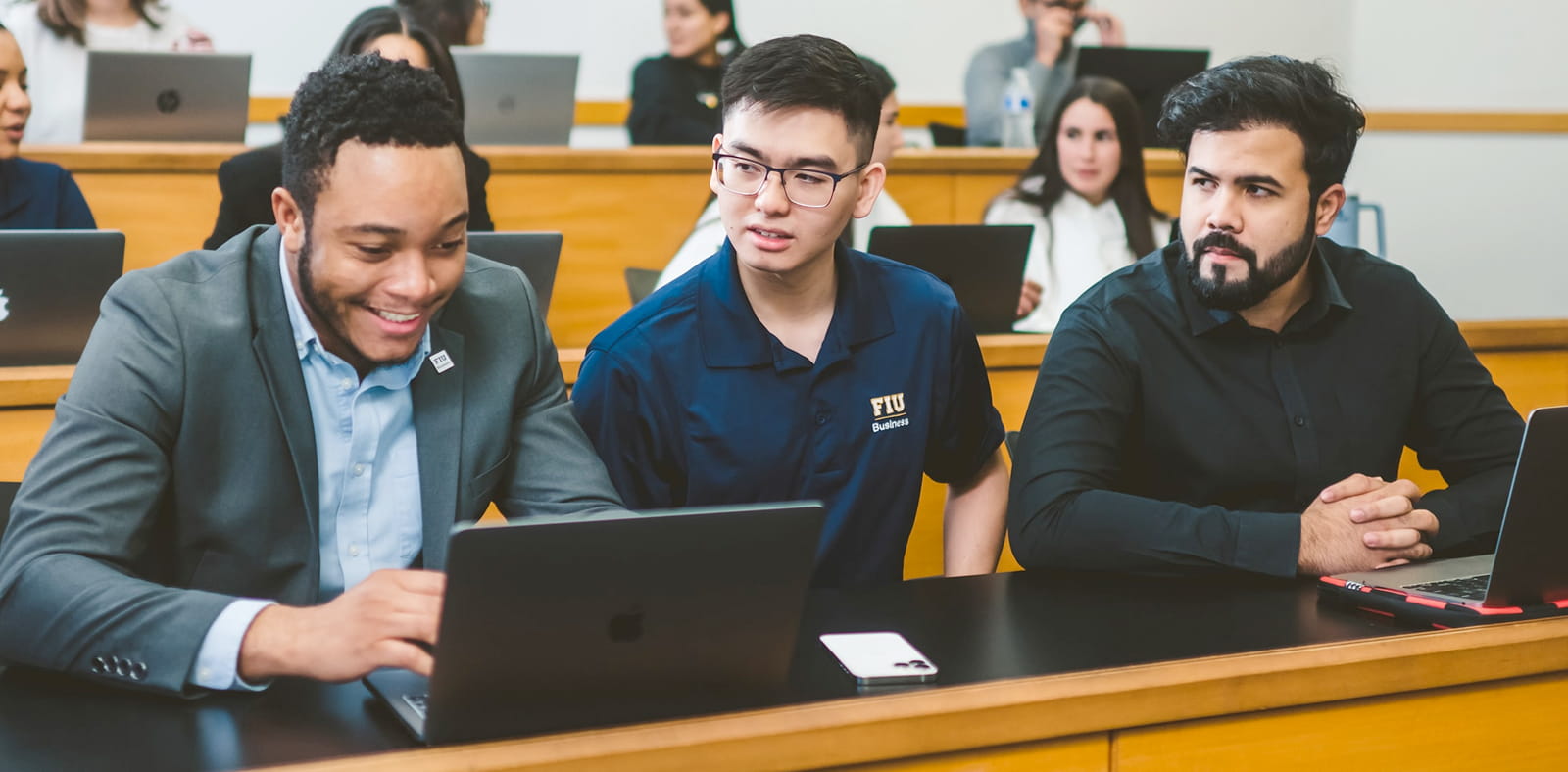
The Business Analytics with Artificial Intelligence program at FIU Business has reached capacity less than a year after its launch, reflecting growing student interest in applied AI skills and strong early employment outcomes for graduates.
The undergraduate program quickly grew to nearly 1,000 students, said Karlene C. Cousins, department chair of information systems and business analytics.
“The demand has been unlike anything we’ve seen before,” Cousins said. “Students are looking for programs that help them understand how to use AI and analytics in business settings, without requiring a deep dive into computer engineering.”
Launched in fall 2025, the program blends business fundamentals with business analytics and artificial intelligence, appealing to students who want to apply emerging technologies to real-world business challenges. Cousins said the surge reflects a broader shift in how students view career readiness, as employers increasingly seek data-savvy graduates who can translate insights into decisions.
That demand extends beyond the undergraduate level. Graduate programs within FIU Business that added AI components have maintained strong enrollment even as many business schools nationwide report declining numbers, Cousins said.
Early job outcomes are reinforcing student interest.
Daniel Rawana, who graduated in December 2025 from FIU’s master’s program in information systems with an AI focus, secured a full-time role within weeks of graduation. He now works as a software engineer at Southern Auto Finance Company, which uses AI-driven models to evaluate credit risk for auto loans.
“Just having an AI-focused degree from FIU on my résumé made a difference,” Rawana said. “It showed employers that I’m committed to continuous learning and staying on top of where the industry is going.”
Rawana said FIU’s career resources also played a key role in his job search. He found the position through Handshake, the university’s career platform, and worked with FIU Business Career Services to refine his résumé and prepare for interviews.
During interviews, Rawana said employers were especially interested in how he applied what he learned in the classroom, as well as his involvement outside of coursework. While at FIU, he participated in student organizations related to analytics and information systems and led workshops to introduce undergraduates to AI concepts.
“Being involved beyond just classes helped me stand out,” he said. “It gave me confidence talking about my skills and experiences in interviews.”
Cousins said that kind of engagement is common among students drawn to the program. Many actively seek opportunities to learn beyond the classroom, connect with faculty and industry professionals, and build résumés that reflect both technical and business acumen.
“Our students don’t just graduate knowing concepts,” Cousins said. “They know how to talk about what they’ve learned, how they’ve applied it and why it matters.”
While enrollment growth has required careful management, Cousins said the program’s success highlights FIU Business’ emerging role in preparing graduates for an AI-driven economy.
“We’re seeing strong appetite from students because they recognize these skills are no longer optional,” she said. “They’re essential.”