
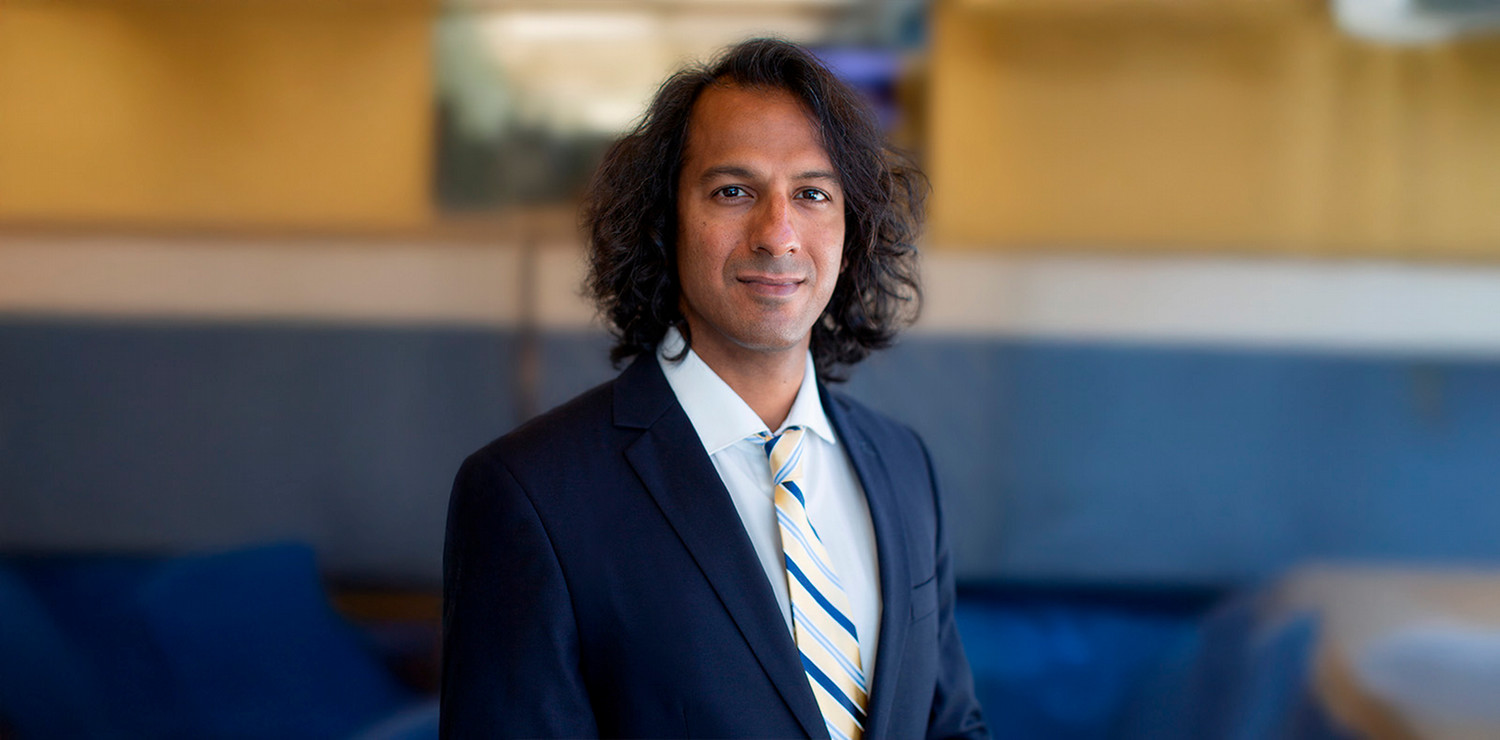
When the Great Recession struck in 2008, much of the blame centered on risky mortgages and the collapse of the housing market. For Walter D’Lima, then an aspiring scholar, the crisis ignited a lasting fascination with real estate markets and the forces that drive them.
“Many argued that the recession was predominantly real estate-related due to problematic mortgages,” said D’Lima. “I found that interesting, and I thought, this is something I want to spend a lot of my time on.”
D’Lima went on to earn his PhD in Business Administration from The Pennsylvania State University in 2016, where he honed his expertise in real estate and urban economics. Today he serves as director of the Master of Science in International Real Estate (MSIRE) program and associate professor of real estate at FIU Business.
His research examines how frictions, such as information gaps or barriers to matching buyers and sellers, shape real estate transactions. That focus, he said, is uniquely supported at FIU, home to one of the few dedicated real estate schools in the country. In fact, FIU Business is ranked No. 1 in the world for real estate research productivity by the Journal of Real Estate Literature, which also places D’Lima at No. 16 among the world’s most prolific real estate scholars.
“Having colleagues and an entire department focused on real estate makes it much easier to advance meaningful research,” he said.
D’Lima’s work has attracted attention well beyond academia. One of his studies, which analyzed broker connections in commercial real estate, showed that deals completed by brokers with established ties to buyers generated price premiums. “It suggests that connections actually add measurable value,” he said. “It’s a real-world outcome that validates the importance of networking.”
Another project, published in Real Estate Economics during the early days of the COVID-19 pandemic, was among the first to document the crisis’ impact on property values. The study found that shutdown orders led to price declines as buyers and sellers struggled to complete transactions. That paper has since been cited nearly 200 times, reflecting its influence on both scholarship and practice.
Inside the classroom, D’Lima integrates those insights into MSIRE coursework, which blends foundational economics with hands-on applications. The program, he said, is designed for professionals who return to school not for grades, but to sharpen their expertise and apply it directly in their careers.
“Our students care about both the big-picture economics and the practical tools like cash flow analysis,” D’Lima said. “I try to cater to both. The applied side is essential, but I’ve found students are just as interested in understanding the underlying mechanisms of how markets work.”
Beyond the classroom and research, D’Lima finds inspiration outdoors. “I don’t own a television,” he said with a laugh. “I prefer to spend time in nature whenever I can.”