1
1

By Michelle Lopez
 Hemang Subramanian
The patents, both granted in early 2025, aim to solve real-world technology challenges in healthcare and digital commerce. One patent can enable encrypting NFTs for storing healthcare or medical records, while the other can detect fraudulent QR codes, an increasingly common threat in cities like Miami.
"The inventions were driven by very specific problems I saw in the real world," said Subramanian. "Healthcare data is often siloed, insecure or hard to access. Meanwhile QR code fraud has become rampant, especially in public spaces where unsuspecting users are easily misled."
The first patent, granted in January 2025, enables patient health records to be encrypted and stored as NFTs on a blockchain. Each token contains tamper-proof encrypted data – allowing patients and providers to share sensitive medical information securely and with full traceability.
"The innovation here is using NFTs not as collectibles, but as secure digital containers for medical data," said Subramanian. "It has potential to simplify record-sharing between providers while complying with privacy laws like HIPAA."
"We're creating practical tools that can protect consumers, improve patient care and help businesses build trust in digital transactions."
– Hemang Subramanian
Subramanian envisions hospitals, clinics and even insurance companies leveraging this technology to streamline patient care and lower administration costs.
The second patent tackles a more public-facing problem: the rise in QR code fraud, in which scammers replace legitimate QR codes on parking meters, restaurant menus or public signs with malicious links.
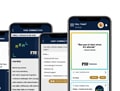
In response, Subramanian developed a system that authenticates QR codes using a blockchain-backed reputation mechanism. The platform not only verifies a QR code's origin, but also tracks user feedback over time to build a trust score for each code. "It's essentially a fraud-detection system embedded in your phone or QR scanner," he explained. "It can tell if a code is fake before you scan it, potentially saving consumers from phishing scams or financial threats."
Subramanian is currently exploring licensing and startup opportunities.
"There's real commercial potential here," he said. "We're creating practical tools that can protect consumers, improve patient care and help businesses build trust in digital transactions."