
By any measure, uncertainty defines today’s real estate market. Interest rates remain volatile. Construction costs are stubbornly high. Global capital is cautious yet restless. And Miami – once seen as an emerging market – is now firmly positioned among the world’s most watched cities.
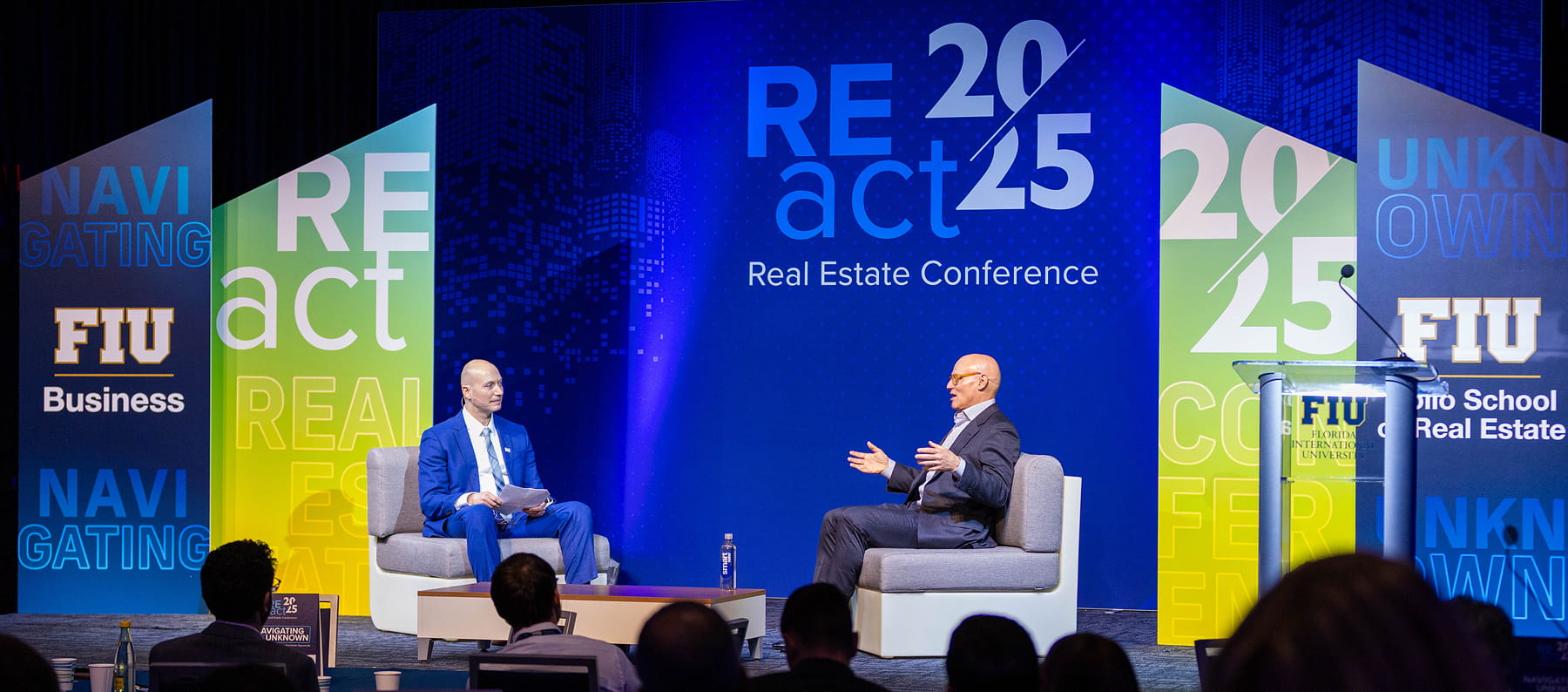
Those realities framed the conversation at FIU Business’ sold-out REact 2025 Real Estate Conference, where more than 300 developers, investors, lenders, executives and students gathered Nov. 14, 2025, at FIU’s main campus. Now in its fifth year, the conference has become one of South Florida’s most influential forums for examining where the industry is headed, and how leaders can succeed without a clear map.
The theme of this year’s conference, “Navigating the Unknown,” resonated throughout the day, shaping candid discussions about risk, resilience and the long-term forces reshaping Miami and the broader real estate landscape.
Turning Uncertainty Into Strategy
From the outset, conference MC David Siddons, CEO of the David Siddons Group, framed the moment bluntly: South Florida is more dynamic than ever, but that dynamism brings instability. The challenge, he noted, is not avoiding uncertainty but learning how to convert it into opportunity.
That mindset was echoed by Craig Robins, founder and CEO of Dacra, whose fireside chat with Eli Beracha, director of the Hollo School of Real Estate at FIU Business, offered a master class in long-term vision. Robins is widely credited with transforming the Miami Design District into a global destination for art, fashion and culture – a process that unfolded over decades, not development cycles.
“I want each piece of land in our neighborhood to make the whole neighborhood worth more.”
— Craig Robins
For Robins, navigating the unknown requires rejecting the idea that real estate success can be fully captured by short-term financial models. While pro formas are necessary, he argued, they are insufficient when the goal is to create lasting value.
“I want each piece of land in our neighborhood to make the whole neighborhood worth more,” Robins said, describing an approach that prioritizes placemaking over isolated projects. In his view, creativity, patience and community-building are not luxuries – they are competitive advantages in unpredictable markets.
Miami’s Evolution on a Global Stage
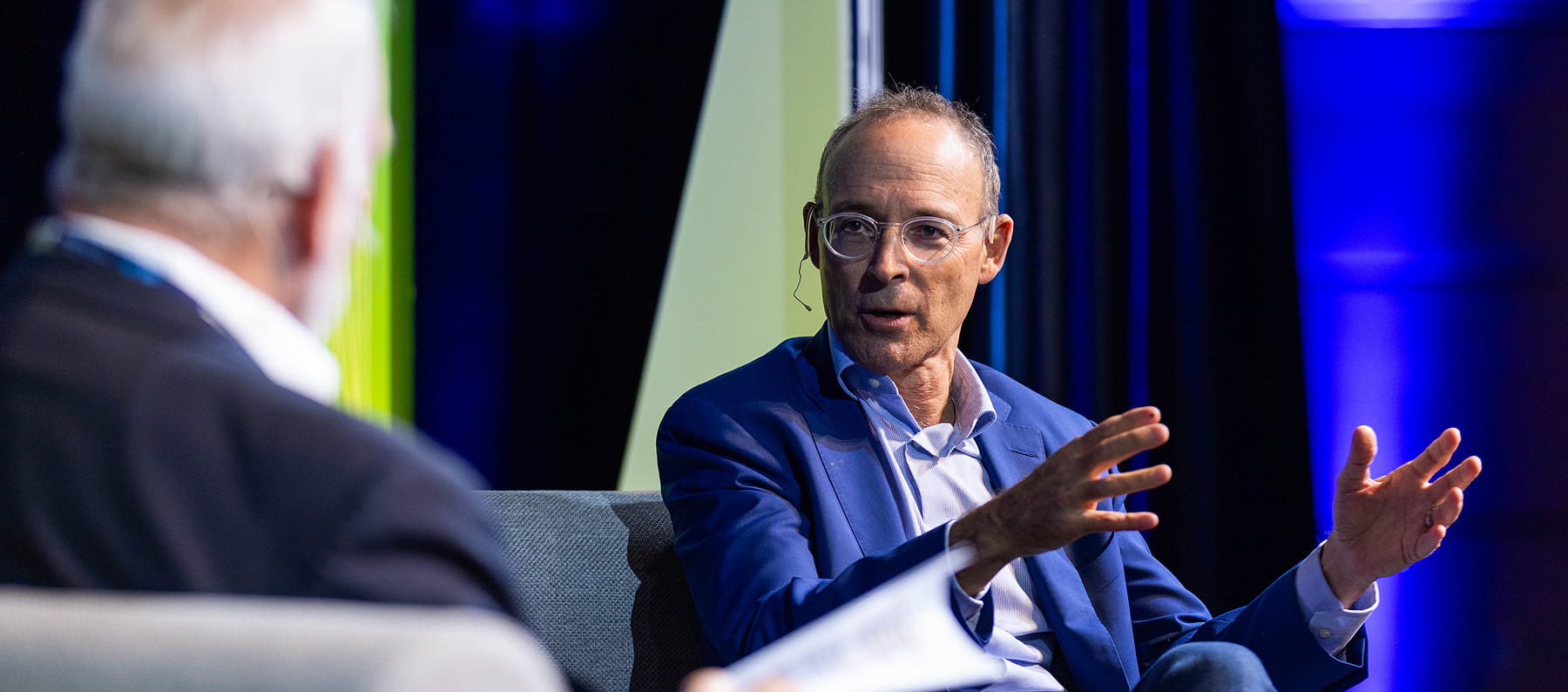
That long-term perspective was reinforced by developer Miki Naftali, chairman and CEO of the Naftali Group, who spoke about Miami’s transformation from a regional market into a global lifestyle destination. Naftali, whose firm develops luxury projects across the United States and internationally, emphasized that Miami now competes directly with cities like New York, London and Paris for buyers, capital and attention.
With that shift comes heightened expectations. Buyers are more discerning, comparisons are inevitable and design quality matters more than ever. Success, Naftali explained, depends on deeply understanding demand – not just what the market can absorb today, but what it will value years from now.
His comments underscored a recurring theme of the conference: The unknown is not randomness, but complexity. Leaders who invest in research, insight and disciplined planning are better equipped to manage it, Naftali said.
A Booming Market With Real Constraints
While Miami’s growth story continues to attract global interest, REact’s capital markets panel highlighted the tension beneath the optimism. Florida remains one of the fastest-growing states in the country, yet the fundamentals supporting that growth are under strain.
Panelist Justin Harp, managing director at FHN Financial, pointed to rising construction costs and housing affordability as challenges that can no longer be ignored. In many Florida markets, worker housing has become increasingly difficult to deliver, forcing employees into long commutes and raising concerns about sustainability, he said.
“Success depends on deeply understanding demand – not just what the market can absorb today, but what it will value years from now.”
— Miki Naftali
At the same time, Michael DiCosimo, senior director of capital markets at JLL, noted that Florida’s economic base is diversifying. Technology firms, life sciences companies and corporate relocations are reshaping the workforce, adding resilience, but also complexity, to the market, he added.
The consensus among panelists was cautiously optimistic: Florida remains a compelling place to invest, but navigating the next phase will require new approaches to financing, development and collaboration.
Lessons From Experience
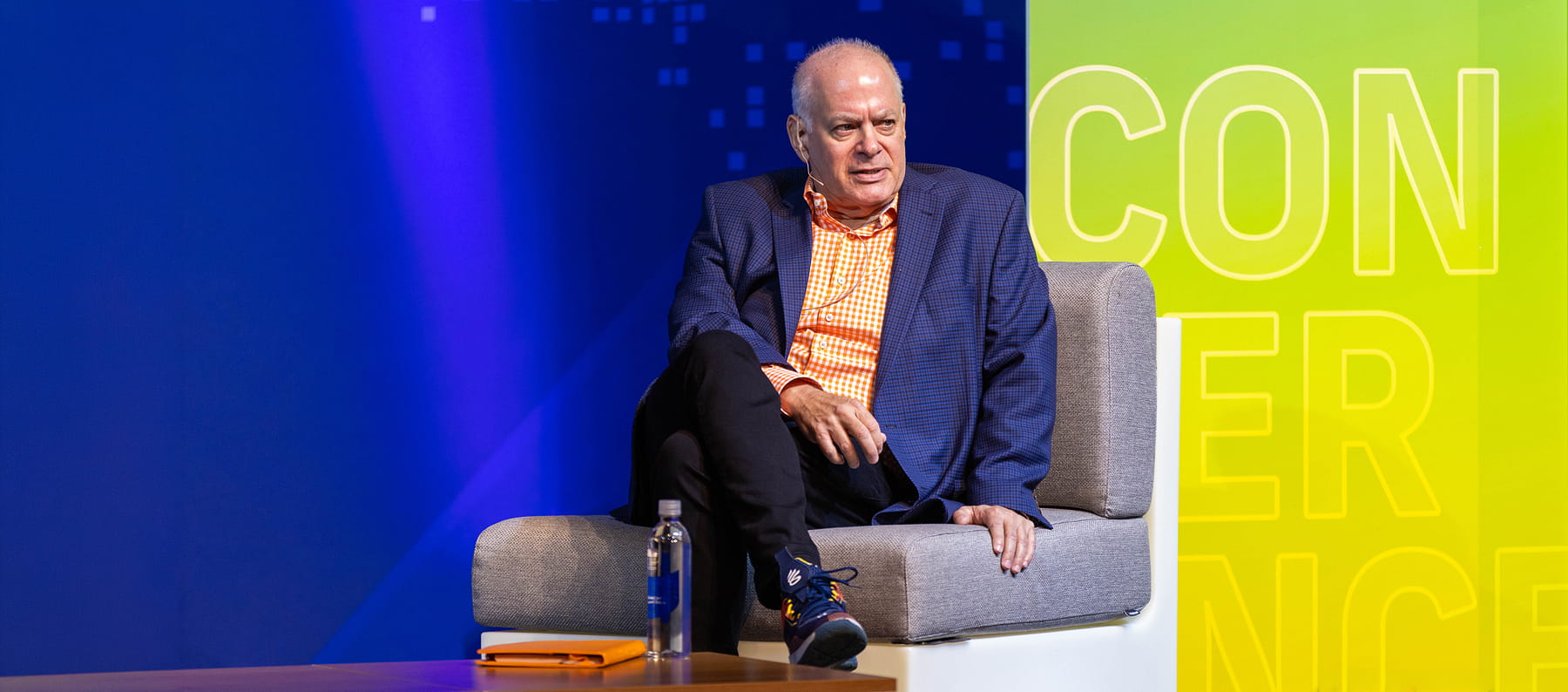
For Stephen Bittel, founder and chairman of Terranova, uncertainty is not new. In a fireside chat moderated by Jamie Levenshon, senior vice president of commercial real estate at Insurance Office of America, Bittel reflected on decades of building, investing and reinvesting in South Florida – through booms, busts and everything in between.
“We all learn more from the losses about what not to do,” Bittel said, emphasizing that resilience is forged through experience. Success, he added, comes from preparation, curiosity and an unwavering work ethic. “I never thought I was the smartest guy in the room,” he said. “But I was sure I was never going to be outworked.”
Data, Discipline and Perspective
Bringing the day together, Beracha delivered a market update grounded in data rather than speculation. Interest rates, while elevated compared to pre-pandemic levels, have eased significantly from their peak. Valuation signals between public and private markets have begun to rebalance, suggesting greater stability ahead.
Locally, Beracha addressed concerns about affordability by placing Miami in a global context.
While prices have risen sharply over the past decade, Miami remains less expensive than many peer gateway cities when adjusted for income and long-term growth prospects, he added.
Beracha also spoke about FIU’s role in real estate education and research, noting the Hollo School of Real Estate’s strong academic standing and its focus on preparing students for careers in a complex and evolving industry. The school’s research output and graduate programs, he said, have helped position FIU as a meaningful contributor to real estate scholarship and professional practice.
That growing engagement was reflected in the conference itself. REact 2025 drew a full audience of approximately 350 registrants, illustrating the event’s continued relevance as a forum for dialogue among South Florida’s real estate community.
A Blueprint for What Comes Next
As the day transitioned into a networking reception, conversations spilled beyond the formal program – a reminder that navigating the unknown is not a solitary endeavor. The relationships forged, insights shared and questions raised are as much a part of the conference’s value as the panels themselves.
What emerged from REact 2025 was not a prediction of the future, but a framework for approaching it: invest in research, think long-term, embrace creativity and remain adaptable in the face of change.
In a city that has reinvented itself time and again, uncertainty is not an anomaly – it is the norm.